Physical Education Essay
Alexander Todd Meade Szwed
CCSU Undergraduate 2014
Physical Education Major, Acting Performance Minor
Society today has many different definitions of physical education. Introduction to Physical Education, Principles and Strategies (SHIMON 2011) claims that, the whole person’s mind and body is developed from the process of learning physical education by which students use physical activities. A common misconception of physical education is that it consists of purely physical activities. A general definition of physical activities is strictly body movements to develop a better fitness level and to become more active. Physical education however, is much more than physical activity. As a future teacher I plan on developing the outlook of physical education that is focused more on lifelong learning that inspires children to become self-empowered, healthy, loving and motivated adults with resilient attitudes.
Physical education requires students to learn the content in order to specialize and feel self-empowered within the subject area. The four domains of physical education include the psychomotor, cognitive, affective and the social. The psychomotor domain includes the neuromuscular component which explains that the brain sends signals to the body parts in order to move. Students need to learn these advanced skills that will help them later in their life. They must be fundamentally sound with the groundwork of physical education. From there, students can build upon that strong base of knowledge. There have been instances in my life where I have learned the essentials to an activity or sport and then progressed to learn the more advanced skills too quickly thus forgetting the basics. An example of this is was when I played lacrosse competitively. I made the mistake of focusing too early on the advanced skills such as shooting underhand. Eventually, I ended up forgetting some of the fundamentals within lacrosse which included overhand throwing and catching. Consequently I developed bad habits. It was only after realizing this that I ended up relearning the basic essentials to lacrosse in order to compete at a higher level. This example has provided me with a significant learning experience that has taught me the importance of fundamentals in which I will bring light to in my future physical education lessons. The fundamentals being taught within my classroom will bring importance to a lifelong healthy lifestyle that will prevent obesity and other health complications.
America’s obesity conundrum has become an increasingly bigger problem every day. Exercising daily will reduce this obesity problem as well as preventing cancer and other diseases. I am currently in the process of becoming cross endorsed in Health. I will use this content knowledge to help students better understand the importance of health by focusing on a wide array of health aspects such as personal hygiene and food labels. During my experiences in physical education I have seen many of my fellow classmates fail the fitness test due to difficulties with obesity. In my earlier years I recall jogging around the track during the mile run while many of my classmates were walking due to their overweight bodies and inadequate fitness level. Let's not forget that genetics play a role in a student's fitness level and the most important part of fitness is that he or she does not give up; everyone has to start somewhere regardless of how fit or obese they are. This leads me into my next reason for teaching Physical Education which is attitude.
Attitude to me is the single most important idea in life. Attitude is an intrinsic double edged sword that can either lead a student to conquer his or her wildest expectations and dreams. On the other hand, it can ruin even the most talented and skilled students leaving them distraught and discouraged. During life people are faced with plenty of good and bad experiences that shape their overall attitude. More and more students are presenting a fabricated fallacy in which they have no control over their own attitudes; a proposition that incases the idea that we are doomed by our past thus explaining our fraudulent fixed attitudes. I am confident that our attitudes are most-definitely conquerable. In fact, a student’s or teacher’s attitude may be the only thing that he or she can regulate. It is impossible to revise the past, or change the ways that people will act. Let’s make it clear that bad experiences in life are going to exist regardless of how hard you try to control them or avoid them. The only strategy that a teacher can cultivate is to prepare these students for these uninvited experiences. A saying that has motivated me throughout my life is: I do not have to worry about the majority of things because I have planned for these unfortunate events and have expected them.
At some point in life students are going to be struck with a negative life changing experience that will cold heartedly shape their attitudes. Realizing that attitude is the only construct that students have control of is crucial in their life to overcome these obstacles. For some adults it takes a whole life time to understand that they are not doomed by their past. I am appreciative to understand this awareness earlier on in my life. I plan to practice this notion to my advantage within physical education by modeling this concept to my future students.
Physical Education is more than a class in a curriculum. It is a way of life. Many schools underestimate the benefits of Physical Education. The benefits range widely from different sides of the education spectrum, specifically relating to the area of Health. Furthermore, studies have proven that people who are physically active generate more blood-flow to the brain which leads to positive decision making, alertness, attentiveness and improvements of intellectual functioning. Studies also have supported that physical activities can positively affect your psychological well-being which can help with anxiety, depression, and self-esteem difficulties. Students who learn and perform the skills in physical education can use them constructively throughout their life. Personally, the idea of exercise and physical activeness has aided me periodically throughout my life. The most constructive method that countered a rough patch in my life was always exercising or sports. For instance, before coming to Central Connecticut State University I was struck with depression that plagued me while I was out of school in which I conquered with daily exercise and participation in sports.
My Physical Education philosophy is based on creating a space for students to feel a sense of autonomy, purpose and mastery. Every person should explore different areas in life even if they believe that they will not enjoy it. Students will have to try unfamiliar things in their life regardless if they want to or not. However, students will never learn if they like something if they do not experience it in the first place. Leaving no stone unturned is a saying that I live by and I plan on modeling this idea within my future classroom. For instance, I grew up my whole life playing sports. I always ignored theatre because I did not think that I would enjoy it. Currently, I am an Acting Performance minor and I am discovering another part of myself that is very expressive and confident on stage. Additionally, I have overcome my fear of stage-fright which will help me in my future teaching career to speak eloquently in front of large audiences.
Several teaching theories have molded my own idea of what teaching should be all about. Humanism in particular I have been closely drawn to which is the idea of being a facilitator rather than a teacher thus giving the students the freedom to explore the content. The facilitator should be empathetic to the children’s feelings rather than becoming a dictator over the class. During my field experience at the urban environment of Pulaski Middle School in New Britain I established imperative relationships with students by listening to their feelings and personal interests. This strategy engaged the students and helped them understand the purpose of their class. For example, a student who wanted to become an NBA basketball player kept procrastinating about the class work. I began to ask him how he thought he could become a basketball player. His response was that he needed to go to college first which prompted me to explain that he needs good grades in order to get in to college. This small interaction helped this student participate in his class duration that I was observing at Pulaski Middle School. In order to have control of the class, one must adapt their teaching styles to the class and the students.
Moreover, I am currently exploring a variety of ideas in education that focus on the wide range of ethnicities. Every student in any Physical Education class should feel accounted for and safe regardless of his or her ethnicity, sexual orientation or religious back ground. Even though I enjoyed physical education during my younger years, I still encountered unwanted experiences that could have been avoidable if the teacher had been supervising. During third grade, my class was playing soccer outside and a scuffle had broken out by the netting of the soccer goal. Somehow the netting of the soccer goal was wrapped around my neck and I almost choked to death. This unforgettable instance will forever shape my idea of supervision within the classroom and will implement my focus on supervision and safety in order to guarantee that my unfortunate incident is never experienced again by another student while I am teaching.
Diversity is just as significant as any of my prior themes. I grew up in Windsor, CT where there is a diverse school environment. I made plenty of friends with different backgrounds and different ethnicities due to this diverse climate. This fact has helped me effectively socialize with many different types of people successfully. I will do everything in my power to create a class of equality and diversity. However, the equality of students is not limited to different ethnicities. Students who have different sexual orientations and who speak different languages should be treated with the same respect and encouragement as any other student. I plan to build this idea of diversity and equality within my future classroom by exploring different parts of the world to enhance my knowledge of foreign physical activities and sports that could also be taught in the U.S.
I undoubtedly believe that students will be the most self-empowered when they recognize the positive effects of my future Physical Education class and I will continue to believe this idea throughout my teaching career.
Classroom Climate Plan
My Physical Education classroom will provide a positive, friendly climate that will help students become self-empowered, motivated and excited learners. The climate of a classroom is dependent on factors including diversity of cultures, relationships among participators, physical environment, and strategies used to mold the desired classroom environment. These strategies will arrive from the different explored theories and my prior experiences within the classroom.
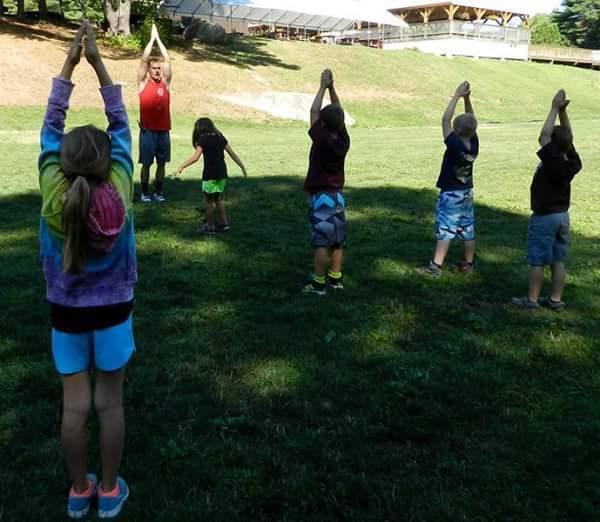
My goal is for all students to be captivated by my activities. The variety of activities taught in my class focus on the interrelationship of the mind, body and spirit. Students use dancing for expression and develop relaxation exercises such as mediation and yoga to calm their minds and spirits which in turn will promote personal mindfulness. If a student or a teacher were to walk in to my classroom I would expect them to have an explosion of their five senses and immediately become fascinated. The emotions that stem from my classroom will extend throughout the school. When all children become excited about their PE class then my desired class has been fostered.
The physical environment of my classroom will be welcoming and supportive to students. As a facilitator and teacher I will model the behavior that is beneficial to the student’s well-being. Student will create personal motivational and inspirational posters that will illuminate the well-lit classroom or gym emulating the desired attitudes of the students and the positive atmosphere.
The student’s brain is wired for pleasure and selectiveness thus learning should be joyful. To grab the student’s minds is to motivate them. Facilitation of the students will center on the autonomy of the classroom where students are given the opportunity to explore freedom and expression. Establishing a fun atmosphere with patience and empathy towards the feelings and emotions of students is essential to build strong, trusting relationships amidst all of the participators of the class. These relationships will enable the students to positively socialize their ideas thus building off their prior knowledge or experiences. In turn, this aspect will help the students gain necessary social skills that are critical in today’s society.
Diversity of activities and students will correlate significantly from the school’s demographics and curriculum standards. However, the diversification of Physical Education is dependent on the variety of activities that correlate to different parts of the world and different cultures. Students in my class participate in different types of activities that have been played around the world thus expanding their horizons.
Students who speak English as a second language will be treated with respect and dignity. As a teacher, by showing interest in learning the native languages that are reflected in our classroom creates a positive environment for students. Furthermore, students are provided with equal learning opportunities focusing on their abilities rather than their disabilities. Diversity and equality will break the barriers of socialization between different cultures as well as students with different sexual orientations. This construct allows students to develop and prolong an open mindedness that will benefit them throughout their lives.
Motor Learning Synopsis and Learnings, Alex Szwed
The term Physical Education does not fully capture the depth or purpose of the discipline. While the word “physical” suggests a focus on bodily movement alone, physical education is far more comprehensive. The mind, body, and spirit are deeply interconnected and interdependent. To define physical education solely as physical activity would be similar to saying mathematics is only algebra, science is only chemistry, or social studies is only history. Physical education encompasses motor development and motor learning, illuminating the connections between anatomy, physiology, biology, psychology, and even philosophy within the field of exercise science.
Motor learning has played a critical role in my development as both a teacher and a coach. It is defined as the study of how students and athletes learn, develop, and perform skills, as well as how those skills are applied in various situations. Motor learning is closely related to motor development, particularly because many learners—especially children—are still developing their physical capabilities. Motor development refers to a child’s ability to interact with their environment while developing bones, muscles, reflexes, and coordination. Importantly, early skill level does not necessarily predict long-term proficiency. This reinforces the need to provide all learners with adequate time and opportunity to practice.
However, practice alone is not enough. Meaningful, relevant, and mindful practice is essential for skill development regardless of prior ability. As Vince Lombardi famously stated, “Practice does not make perfect; perfect practice makes perfect.” Effective instruction requires intention, structure, and awareness of each learner’s needs.
Motor learning relies on various theories and hypotheses that aim to produce efficient movement with minimal energy expenditure. One of the most impactful concepts for my growth has been the distinction between internal and external focus. Students and athletes vary widely in their inherent abilities, and effective instruction depends on recognizing these individual differences. While abilities themselves are largely fixed, skill development depends on a teacher’s ability to build upon those abilities through thoughtful instruction.
Skill development is also influenced by sensory-perceptual factors, which include prediction, decision-making, and movement production. Prediction is based on sensory input and prior experience; decisions are made using this information; and production refers to the muscular movements that execute the skill. Motivation plays a significant role in this process, as low motivation can disrupt any of these stages.
The distinction between open and closed skills is evident in both classroom and athletic settings. Open skills, such as playing a small-sided basketball game or avoiding a defender, occur in unpredictable environments and promote cognitive development, decision-making, and adaptability. Closed skills, such as shooting a free throw or hitting a golf ball, occur in predictable environments and emphasize technique and motor control. Research suggests that open-skill activities enhance reaction time and higher-order thinking more effectively than closed-skill activities. Because complex sports often require both mental and physical skills, it is important to develop foundational motor skills in controlled environments before progressing to open-skill situations.
It is also essential to distinguish between motor learning and motor performance. Motor learning is an internal process that develops gradually and remains relatively stable over time. Motor performance, on the other hand, is observable and can fluctuate due to fatigue, motivation, or attention. Understanding this distinction helps educators avoid misinterpreting poor performance as a lack of ability when it may stem from external stressors or reduced motivation. As a future teacher, recognizing this difference will be crucial in responding appropriately to student needs.
Skills can further be classified as discrete, continuous, or serial. Discrete skills have a clear beginning and end, such as swinging a baseball bat. Continuous skills, like swimming, have no defined start or finish. Serial skills fall between the two and involve a sequence of movements, such as brushing teeth or playing the piano. When teaching discrete skills, shorter intervals between repetitions have been shown to promote better long-term learning, provided the practice is purposeful.
Instructional strategies also vary between explicit and implicit learning. Explicit learning involves conscious awareness of technique changes and understanding why improvements occur. Implicit learning occurs without conscious awareness, relying on repetition and outcome-based focus. Both approaches have value. While implicit learning allows learners to discover solutions independently, explicit instruction can increase motivation and understanding by clarifying the purpose behind techniques. Effective teachers and coaches must balance these approaches based on context and learner needs.
The concept of the “quiet eye” further illustrates the relationship between attention and performance. Athletes with a stable, focused gaze tend to perform better under pressure, while those with a wandering focus are more susceptible to failure. Anxiety plays a significant role in attention control, linking internal and external focus. While internal focus is essential when learning new techniques, external focus becomes increasingly important as skills become automatic.
Attention itself is a limited resource that enhances information deemed important by the brain while filtering out distractions. Complex skills demand greater attentional capacity, which is why difficult techniques are often best learned in controlled environments. Parallel processing allows multiple streams of information to be processed simultaneously, such as dribbling a basketball while scanning the court. Phenomena such as the cocktail party effect and inattentional blindness demonstrate how attention can shift or fail entirely, emphasizing the importance of situational awareness in physical activity settings.
Reaction time, movement time, and response time further influence performance. Reaction time refers to the interval between stimulus recognition and movement initiation, while movement time is the execution of the movement itself. Response time combines both. As the number of choices increases, reaction time also increases, a concept known as choice reaction time. Anticipation—whether spatial, temporal, or event-based—can significantly reduce reaction time and improve performance in open-skill environments.
Finally, memory plays a central role in learning. Information is processed through the short-term sensory store, short-term memory, and long-term memory. Long-term memory persists due to strong neural connections formed through meaningful experiences. This highlights the importance of experiential learning, allowing students to connect new information to prior knowledge and real-life contexts rather than passively absorbing content.
Pedagogy, Internalization
On paper and in society, I identify as white or Caucasian. At the same time, I understand that from an evolutionary standpoint, all humans originate from the same source. Biblically, this idea is often framed through the story of Adam and Eve. While these perspectives differ, both emphasize a shared origin. Evolutionary theory, however, also highlights separation through adaptation and survival, which has shaped human behavior and social structures.
I do not consider myself superior to others, though I recognize a subconscious narcissism within myself—something I actively work to understand and challenge. Human consciousness has contributed to this outlook, raising the question of whether narcissism is embedded within all of us. Modern society and the educational system often reinforce competition, consumption, and individual success over compassion and empathy. In this sense, narcissistic tendencies are not simply personal flaws, but socially cultivated traits.
Socially, I identify as a middle-class American, yet I also see myself as one human among countless species sharing this planet. While the separation of people is often harmful to collective well-being, acknowledging cultural and national differences is important for understanding history. Multiculturalism suggests that where history exists, meaning exists. To understand who we are, we must first understand who we have been.
I recognize that I have been fortunate to receive opportunities that have shaped my life. I believe these opportunities should be accessible to everyone. Awareness of privilege is both a compassionate and uncomfortable realization, as it is easy to overlook those who are underprivileged. When opportunities become widespread, they no longer feel like privileges but standards—an outcome that should be the goal of a just society.
I consider myself fortunate to have a healthy body, yet the duality of life suggests that gains often come with losses. While I am physically capable, I do not view myself as intellectually gifted. I work hard for the knowledge I possess and often struggle with public speaking or articulating complex ideas clearly. However, I question whether these perceived shortcomings deserve my focus. The pursuit of knowledge solely to serve a capitalist system, often at the expense of humility and self-awareness, is not something I value.
Regarding sexuality, I identify as heterosexual, though many of these labels are imposed by society rather than self-defined. It is difficult to ignore labels such as white, male, heterosexual, or middle class, as society continuously reinforces them. While labeling originated as a survival mechanism—distinguishing between what is safe or dangerous—it has evolved into a tool for separation and competition among people.
Human consciousness may be an evolutionary mistake, yet now that it exists, we are responsible for how we use it. Consciousness can either fuel greed or foster compassion. Mindfulness offers a pathway to the latter by encouraging awareness over impulsivity, allowing us to reduce harm and oppression.
As a white, heterosexual male, I benefit from unfair advantages. For example, I can enter a store late at night without being viewed suspiciously—an experience not shared by many others. While I have not experienced systemic oppression to the extent others have, I believe it is essential to develop empathy for those who have. As a future educator, empowering marginalized students is especially important.
At times, however, I feel stereotyped because of my identity. In certain environments, such as being the only white person in a basketball game, I feel out of place and judged. While this does not equate to systemic oppression, it has given me insight into how stereotyping can affect one’s sense of belonging.
One experience that profoundly impacted me occurred in Hartford, when police officers approached, questioned and harrassed me late at night based on my appearance. Though the situation ultimately ended without arrest, the fear and vulnerability I felt revealed how easily power can be misused. This experience reinforced my belief that discrimination and oppression, in different forms, can affect anyone yet it much of it is focused on minorities.
Many students resist physical education because it is undervalued by families or perceived as uncomfortable and physically demanding. However, physical education addresses the mind, body, and spirit. When students understand the connection between physical activity and overall wellness, the content gains meaning. Physical activity releases endorphins that improve mood and reduce pain, reinforcing its importance.
Some students resist participation because they feel inadequate in certain activities. Others find PE enjoyable because it is active and social. Regardless, it is the teacher’s responsibility to engage all students meaningfully. While not every activity will be enjoyable for every student, learning to persist through discomfort is a valuable life lesson—just as students who dislike math must still learn math.
I strongly believe in the value of physical education. How we treat our bodies parallels how we treat the earth and each other. The affective domain of physical education—focusing on relationships, self-compassion, and empathy—is the most important. Students must first develop compassion for themselves before extending it to others. Teaching eco-justice reinforces this idea, highlighting the interconnectedness between humans and the natural world.
While all social issues are important, some require more immediate attention, including sustainability, consumerism, environmental awareness, technological dependence, and equality. Humanity’s well-being depends on the health of the earth. Trees provide oxygen and habitats; oceans regulate climate and absorb carbon; pollution from vehicles and industry threatens these systems.
Consumerism, particularly in American society, is a consequence of capitalism ingrained from birth. Media often exploits fear to influence behavior and beliefs, leading to division and hate. Fear, when unchecked, becomes destructive to both individuals and society.
As a future teacher, I aim to cultivate awareness of sustainability through both instruction and personal action. Change begins with recognizing everyday behaviors that contribute to larger problems. Students must learn to question what lies beneath the surface—asking not only what exists, but how and why it exists. Encouraging inquiry fosters deeper understanding and responsibility.
Multicultural education and eco-justice promote awareness of racism, nationalism, and environmental responsibility. Experience is the most powerful teacher. Knowledge and theory alone are insufficient without meaningful connections to students. Social learning, risk-taking, and reflection help educators develop authentic teaching styles.
One challenge I anticipate is managing ego and conflict when addressing sensitive topics. Complex issues naturally invite disagreement, but mindfulness can help navigate these moments productively. Education should shift from a model of global competition to one of global compassion.
Teaching is not about immediate results but about planting seeds. Growth takes time, care, and patience. By fostering awareness, empathy, and critical thinking, educators can guide students toward a more compassionate and sustainable future.
Journals
Field Experience Analysis Pulaski Middle School 2013 Due to my field experience I have learned plenty of useful information and techniques for my future career as a teacher. From the one on one conversations with the teachers, the interviews with the vice principle and guidance counselor, all the way to the one on one time with the students has helped me form a better understanding for what an education should envelop. Generally, within Pulaski Middle School, the students have worked in groups and Ms. Marquez makes sure the class works together in a way that benefits their learning experience. A dispute can be proposed that many of the behavioral issues within her classroom may be due to her softness towards her students particularly in the begginning of the year. Yet a lot of the group work is completed due to the fact that the students recognize Ms. Marquez's compassion. The assignments and projects within class make an attempt to grasp every student's mind directly. Many of the students become positively engaged within projects that allow them to choose a topic. For an example, the students of her class were given the opportunity to choose a topic from the Chinese culture (food, sports, or make-up) and create a power point presentation in which they present to the rest of the class. The problem presents itself when the students are given written assignments that require them to read and write constructively. This style of teaching is boring and undesirable to the students. However, the sad truth remains that the students must learn this style in order to survive in high school and college. Initially, my conscious tells me to not leave any child behind as a teacher. Yet, usually the teachers at Pulaski Middle school have no choice but to leave students behind. A one on one conversation with my observing teacher, Ms. Marquez helped me fully understand her perspective. She claimed that many of the students have at home problems that do not allow them to become motivated regardless of what you as a teacher do. "Take the good with the bad," has become a saying that Ms. Marquez is reminded of each day when she hears students crying in class about their detrimental life at home. One sad instance involves a student that has arrived late to school countless of times because she is physically and mentally abused at home by her father. I have learned and observed a bitter-sweet realization of teaching barriers between teachers and students. Dealing with particular student's inconsistent work habits in return for their good behavior is a method used every day at Pulaski Middle School. Many of the students get away with small misbehaviors such as talking out or swearing because in reality those troubled and misguided children could be doing far worse things. The humanistic style of teaching has become eminent within Ms. Marquez’s classroom in which many of the students become relieved of their problems in life from socializing with Ms. Marquez. I admire Ms. Marquez’s compassion towards her students and I plan to emulate the same nature of care for my future students. Journals The one thing that I learned from the teachings of our first class in EDTE 314 is the presentation of a class and how to capture your kid’s attention. The way that you present yourself during a class introduction is key in order to instill the children’s minds in learning. In a sense, you are "selling the class." This ability to capture their minds will help the children better learn because they actually enjoy learning in your class. One of the factors that Dr. Surgue's brought up is the segregation through neighborhoods. Levittown’s in New York and New Jersey filtered out African Americans that directly related to the neighborhood of Egleston Highschool in the fact that the Egleston area is surrounded by mostly white suburbs. A second factor that was noted by Dr. Surgue was the idea that most Whites in America claim themselves non-racists and “talk the talk,” however they cannot "walk the walk." Many white Americans have good intentions, yet they will not sacrifice their own advantages of being white. In Levin's article, he talks about his friends trying to explain the situation that African Americans and Hispanic Americans by alluding to the idea that it is a genetic trait that has been prohibiting them from succeeding in this country. His friends claim they want equality in America yet they believe it is impossible due their ridiculous idea of inferior genetics. I grew up in a mostly White neighborhood yet I went to a mostly diverse high school in Windsor, Connecticut. Over the beginning part of my life I did not know too many African American Children due to the fact that the neighborhood I grew up in was predominantly white. The town of Windsor is pretty big and in actuality pretty segregated. Once I started to go to elementary school I began to become classmates with African American students and later became friends with many of them through high school. Conversely, at first I found it uncomfortable to talk to the other ethnicities because I was from an all-white neighborhood. If I had grown up in a more diverse neighborhood I would have been more comfortable getting along with the other children at first. On the other hand, the fact that I grew up in a very diverse school system helped me become great friends with many kids ranging in different ethnicities. The Egleston High School is a prominently black and Hispanic school and this may cause them to come up with many of the oligarchy theories that claim that whites are trying to kill their race off because they are unfamiliar with white people in general. In Levin’s article, the kid’s perspectives do not match my perspective of society at all. In a sense, I understand that many of these kids are deprived and trapped in their unforgiving neighborhood. Yet, many of their theories seem to be extremely detrimental to their existence. The majority of kids at Egleston High School believe that all whites are out to get them and that the teachers are trying to teach them inferior material in order to keep them uninformed of certain resources. The comparison of perspectives between the Egleston student and I are clearly different. My perspective of the world and my community is much lighter and lot more positive. It seems that the Egleston students are demoralized from their surroundings. In addition, the kids of Egleston Highschool have heard it all before, one of the students states; “They keep telling us you can make it, but you don’t believe it. It’s bullshit propaganda.” In order to relieve these ghettos I believe that we must try to understand their situations and discover the underlying reasons that most of these kids are in those largely negative situations. Many of the funds that directly help Egleston are cut off and make clear the sad, unfair reality of the poorer getting poorer. Reading this article, I could not understand what type of education they wanted because they kept claiming that the teachers teach them the wrong. However, I know for a fact that theywant to be treated fairly and have a good education. Personally, I want an education that will help me develop skills and useful knowledge to be succesful and happy within this world. As I walked through New Britain, I began to realize all of the culture that has flourished through the different parts. Originally, my assumptions about New Britain were based upon the large Polish community within. However, after taking the walk around the town I started to realize the wide range of different people and social statuses. It amazed me that a quick walk around New Britain showed me that it envelops all types of neighborhoods. It also struck me that New Britain has a large amount of homeless people. With that being said, the community group that we first visited was helping the homeless and the idea made me feel even better when they said that I was easily able to become involved with their group. Overall, the walk around New Britain really opened my eyes. My hometown of Windsor is a generally large town that is located just north of Hartford. Due to this fact, much of Windsor is heavily segregated. Southern Windsor, (Called Wilson) which is close to Hartford is mostly African American and Hispanics along with other ethnicities. Northern Windsor, (Called Poquonock) is mostly a white population. Growing up in Poquonock and then going to Windsor High School was a enlightening experience. The diversity of my High School opened my eyes to different cultures of people (many of which I made great friends with). As I became friends with many different types of people I started to realize the culture of Wilson on the other side of town. Much of Wilson is filled with poverty and gangs. However, many parts of Wilson are very cultured. Restaurants such as Wilson Pizzeria that have Greek Owners serve some of the best pizza I have ever tasted. Dunn's, a Jamaican restaurant that introduced me to amazingly cheap delicious Jamaican beef patties. Additionally, the center of Windsor is more diverse and home to Windsor Highschool, small town shops, a library, and many sporting facilities. The film I watched on Ladakh was very interesting. From the way that the Community has overcome different obstacles and also the way that they have preserved the land that they live on throughout the future years that are upon them. One connection that I drew from the Ladakh film and the indigenous article was the communal aspect. Everyone in the community helped each other no matter what. I recall one instance in the film where a Ladakh resident claimed that people helped other residents that lived miles upon miles away. The interrelatedness of everything on earth is a very important idea of the Ladakh. One representation of this is the crescent moon cradling the sun which symbolizes interdependence. The sun and moon are so far away but yet they are dependent on each other. Additionally, the indigenous article focused on the communal aspect in which it states that we are all part of a community and everyone in that community is dependent on each other. Furthermore, the communal aspect of the indigenous was The second connection I made was the idea of self reliance and connectedness to nature. Everyone in the Ladakh community have skills crucial to their existence. For example, all of the villagers of Ladakh know how to construct houses made up sun dried bricks. The basic needs are important to the community in order to survive. Furthermore, another example would be that the Ladakh have very scarce vegetation in which the herds of animals have to eat, due to this fact the Ladakh move the herds of animals from pasture to pasture in order to preserve the land and prevent over grazing. The indigenous article states, "each person and each culture contains the seeds that are essential to their well-being and positive development. The indigenous also believed that everyone in the community had a role in order to better themselves and better their community." In addition, it states, "A sacred view of Nature permeates its foundational process of teaching and learning." The understanding of connectedness to nature is crucial in order to the indigenous. Overall, I loved the last class and how it coordinated a game and a quiz together. Due to the fact that the quiz was actually a game caused the students and I to just have fun with it and just focus on doing our complete best. The idea of writing down the questions helped the contestants of the game organize their thoughts before they spoke. I believe that sensing the overall energy and attitude of the class depicted that we were all anxious about talking in front of the class. In sensing this attitude and energy, the teacher then made a decision to help the students calm down by choosing the game show style of a quiz. Additionally, the fact that each group was able to communicate and socialize our answers together helped us determine the best answer for each question. This idea of scaffolding relates back to the idea of humanism and social cognitive theory. If I were to improve or modify this game show in order to better my content area of Physical Education I would be more creative and make sure all the students are active physically instead of just one person per group. If I were to be having a quiz or a test for my physical education class and I wanted them to succeed and really learn the content, I would make it so all of the students are active at the same time hence not singling any one student out. By keeping all of the students in the group active, it would help the students work together and be more interdependent for their own group’s members. Scaffolding is one aspect in which we have encountered in this class and is also part of the social cognitive theory and the cognitive theory which is the teacher helps or supports the student in order for the student to complete a task. The zone of proximal development is the level at which the student can complete these tasks with the teachers help. During the Game Show class, our teacher helped us by letting us talk with our group members before the quiz as well as letting us write down our answers before our selected group member answered the questions aloud and let the other group’s judge whether the contestants answered the question proficiently. Generally, scaffolding use in the classroom and other learning areas help students and learners with the skill of independent problem solving later on in life. Authentic Learning is another aspect of the cognitive theory. Authentic learning is based upon the idea of learning important lessons and skills through real-life experiences. Furthermore, authentic learning helps students and learners understand why these skills and lessons are important by using real world examples or experiences. In our class, we walked around New Britain to understand the many dimensions of its society. One important lesson that I learned from walking around New Britain is that poverty is a real crisis in America and we need to recognize that fact. Additionally, another piece that gathered importance was the idea of community help and assistance in order to help our towns, states and country aid to the poverty stricken. By physically walking around New Britain and observing the area, I was able to develop certain knowledge that I would not have developed if I had not gone on this walk around New Britain.